Palazzo Ponteleone
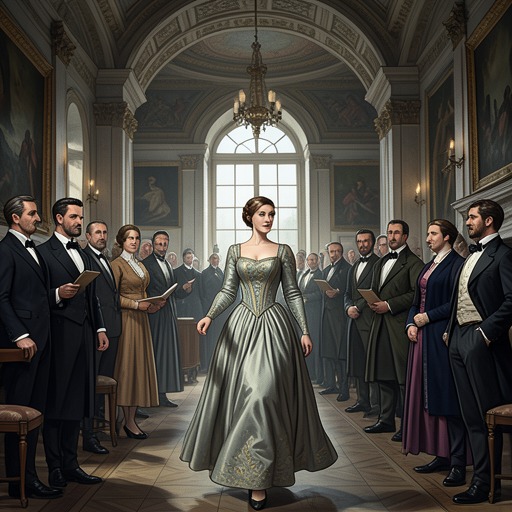
The LeopardPalazzo Ponteleone is the setting for one of Palermo’s leading social events in November 1862: a ball attended by Don Fabrizio Corbera, Prince of Salina, and his family, where Angelica Sedàra is to be presented as the bride-to-be of Tancredi Falconeri. The palace’s importance lies not only in its size and splendour but in the social threshold it represents. Its rooms bring together established aristocratic families and the newly wealthy Sedàras, making the evening a display of rank as well as a test of who may enter Palermo society and on what terms.
Place in Palermo’s Social Season
After the arrival of the Piedmontese and the Aspromonte affair, Palermo’s small social world resumed a crowded round of parties. The same few hundred people repeatedly met to celebrate, in effect, that they had survived the political upheavals. The Salina family moved from San Lorenzo to their town palace for three weeks to avoid making the journey to Palermo for nearly every ball. Within this short season, the Ponteleone ball was especially prominent because of the family’s standing, the palace’s splendour, and the number of guests expected.
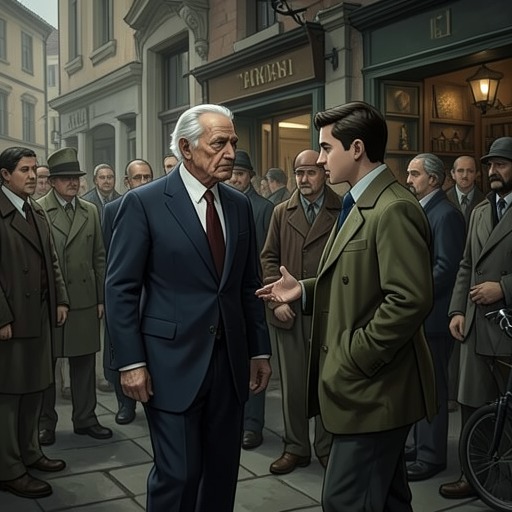
The occasion also had a particular purpose for the Salinas: they were bringing Tancredi’s future bride before society. Securing an invitation for the Sedàras had taken effort. Princess Maria Stella of Salina visited Donna Margherita Ponteleone ten days beforehand, and the invitation remained a small but telling difficulty created by the engagement. The palace’s social authority is thus visible before the guests arrive: access must be arranged, and even a family of the Salinas’ rank must negotiate the discomfort of introducing a socially unfamiliar new relation.
Approach and Interior
The Salinas arrived early, travelling by carriage through Palermo’s dark, narrow streets at a walking pace. At the palace, they alighted in the portico while their carriage disappeared into the vast courtyard, where the sounds and lights of other arriving equipages signalled the gathering already under way. The courtyard’s scale and the approaching stream of guests establish the palace as a setting built for public display and collective ceremony.
Inside, a broad staircase of rough material rises with imposing proportions. Country plants line its steps, while two liveried footmen stand motionless on the landing between flights. Behind high, small, grated windows, the Ponteleone grandchildren watch the arrivals and mock them from their exclusion. The route from portico to drawing-room therefore passes through a sequence of social positions: guests make their entrance in view of servants and children, while the children themselves observe the adult performance from behind a barrier.
The Ball and Its Guests
At the entrance to the first drawing-room, the Salinas meet their hosts, Don Diego and Donna Margherita. The gathering is already in motion: dancing has begun, and the orchestra can be heard from the ballroom through several intervening rooms. The palace’s series of drawing-rooms and ante-rooms gives the ball depth and scale, while delaying the guests’ arrival at its central spectacle.
Tancredi is already there, standing in a corner with several young men and making them laugh with his stories. Though he is among the company, his attention remains fixed on the entrance. The detail makes the palace a stage for both formal presentation and private expectation: the families have come to introduce Angelica, while Tancredi watches for the arrival that will complete the public occasion.
Social and Political Significance
The ball’s splendour does not erase the tensions of the new order; it gives them a ceremonial setting. The Salinas’ early arrival is partly intended to ensure that the Sedàras enter at the time printed on their invitation, a literalness the aristocratic family regards as socially awkward. The careful presentation of the couple and the difficulty of securing the invitation show how marriage links the old nobility to a rising family while leaving distinctions of social ease and recognition intact.
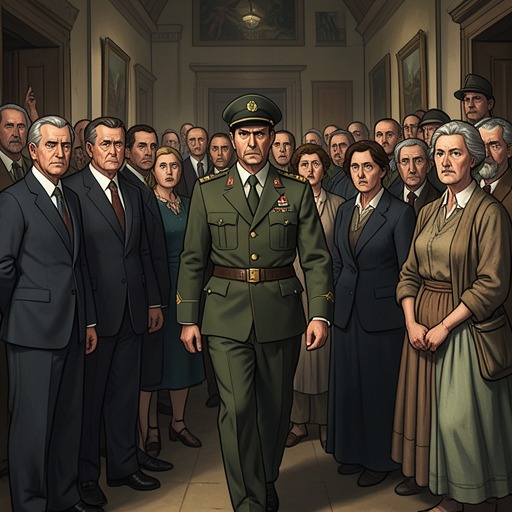
Political change is also present in the conversation around the evening. The Prince of Ponteleone announces that Colonel Pallavicino is expected, praising his conduct at the Aspromonte affair. The remark brings recent conflict into a gathering devoted to renewed sociability. Palazzo Ponteleone consequently functions as more than a luxurious backdrop: its rooms gather political memory, inherited prestige, and changing social alliances into a single public scene.